Costs & Hiring
5 Signs Your Water Heater Is About to Quit
A water heater failure isn't like a dead furnace — it's a dead furnace plus 50 gallons of water on your floor. The good news: tanks almost always warn you first. Here's what to look for, and the price of acting early versus mopping later.
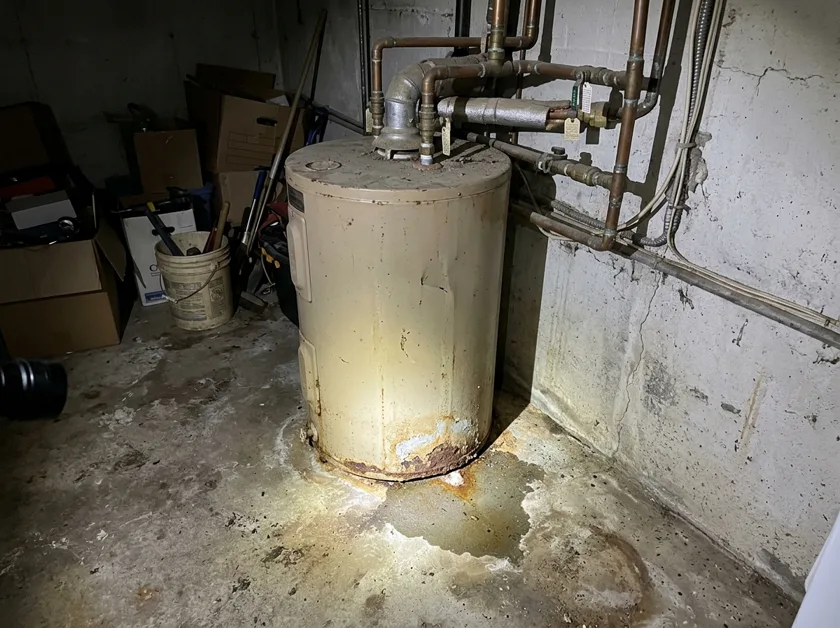
1. It's past 10 years old
Tank water heaters live 8 – 12 years. Find the manufacture date in the serial number on the label (the maker's website decodes it). Past ten, you're on borrowed time — start planning, not panicking.
2. Rust — at the base or in the water
Rust streaks at the bottom of the tank, or rusty-tinted hot water from the taps, means the tank is corroding from the inside. There is no repair for a rusted tank. That's a replacement conversation, on your schedule or the tank's.
3. Rumbling and popping sounds
That's sediment on the tank floor being boiled through — it makes the burner work harder and the steel fatigue faster. Flushing helps if you catch it early; by the time it sounds like a popcorn machine, the damage is largely done.
4. Moisture or small puddles around the base
Check the fittings first — a loose connection or a weeping relief valve is a cheap fix. Water seeping from the tank body itself is the final warning you get before the floor gets 50 gallons.
5. Hot water runs out faster than it used to
Sediment eats tank capacity from the inside. A "40-gallon" tank with years of buildup might effectively be a 25-gallon tank — which is why the third shower of the morning went cold.
Replace-early logic
A planned replacement means you pick the unit, compare quotes, and schedule a Tuesday. An emergency replacement means you take whatever's on the truck at emergency pricing — plus whatever the water ruined. This is the same catch-it-early math as every system in the house: the boring inspection beats the exciting failure. (It's also why the headlamp on our tool list earns its spot — this whole checklist takes five minutes and happens in the dark corner of the basement.)